Vajrapāṇi is among the earliest bodhisattvas (enlightened being) and his rooted in in the religious milieu of Mahāyāna Buddhism. As one of the Eight Great Bodhisattvas, he was usually depicted as peaceful. During the formative phase of Vajrayāna Buddhism however he was utilised a destroyer of obstacles. In a way, his function is similar to that of Cundā who is also evoked as a remover of obstacles.
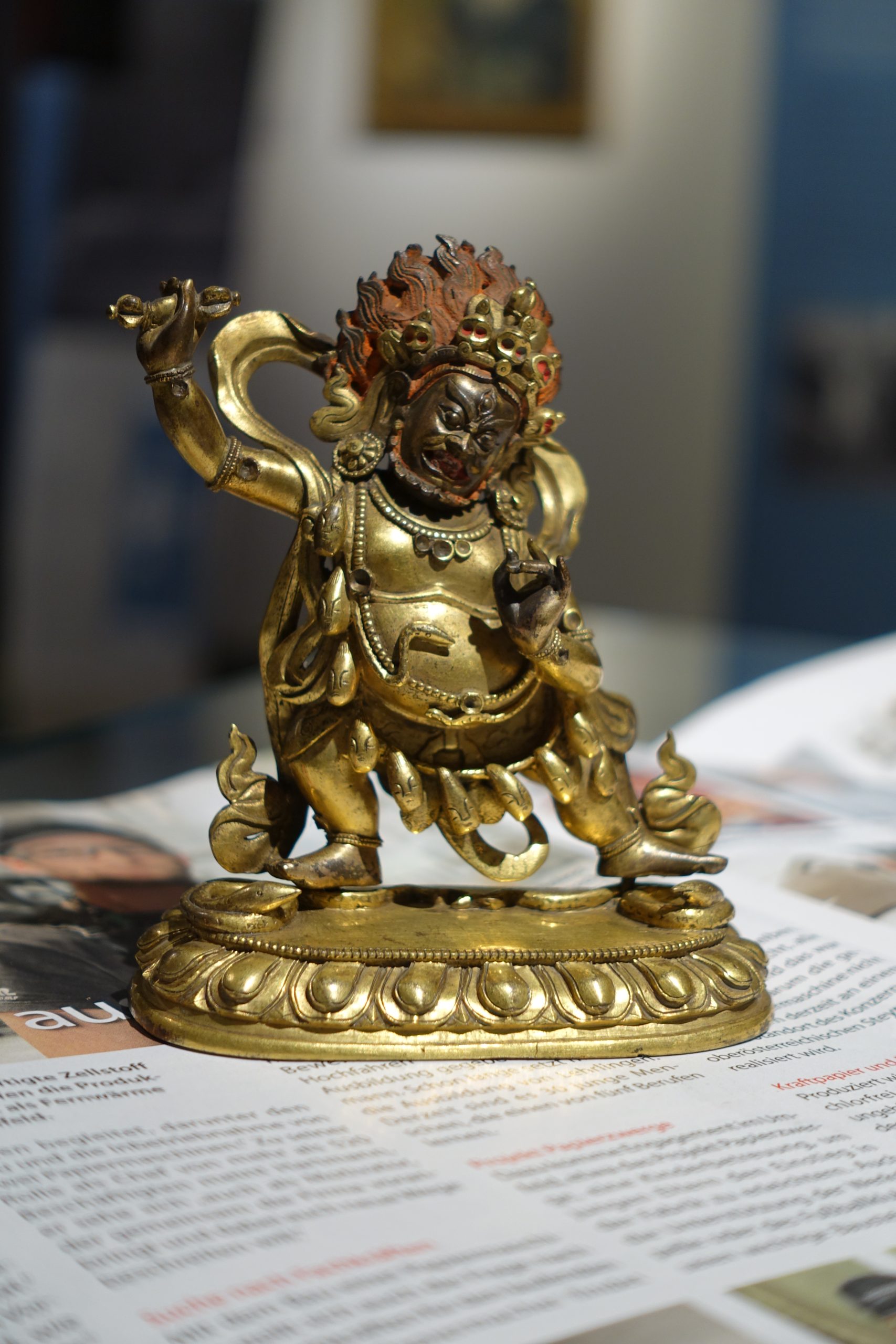
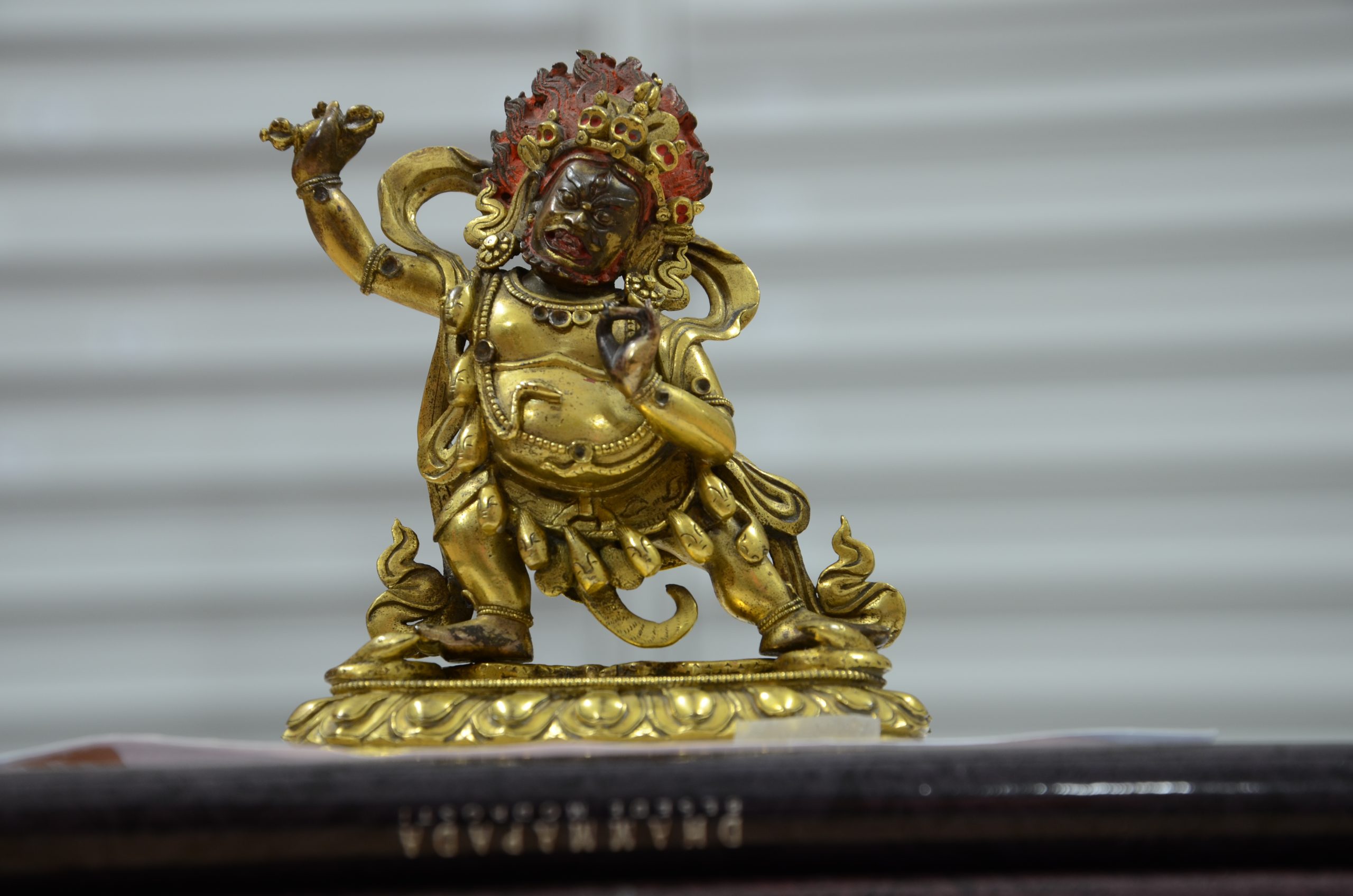
Visually, the two represent different visual concepts. While the goddess is shown as a benevolent mother goddess, the bodhisattva reflects physical violence. As Trailokyavijaya (Victorious in the Three Worlds) he is subduing Śiva who is then depicted as crouching under his feet. When the Mongols adopted Buddhism during the Yuan Dynasty, they made his wrathful form a major protector. The vajra he holds – or rather wields – symbolises the adamantine, unbreakable truth and power. Once established, Vajrapāṇi kept his wrathful form in northern Buddhism also during the following Ming and Qing Dynasties. The Skušek Vajrapāṇi exactly represents this form. The posture is aggressive with the right knee bent though this is hard to recognise because of the bulky shape of his body and the garlands of skulls and demon heads. In addition, he has a long snake girdle. Likewise hard to see is the loincloth made of tiger skin. Only the tail is very clear and the front legs which are suspended from the knot just below the navel. Vajrapāṇi‘s facial expression is pure wrath with the three eyes wide open, the eyebrows and the fangs. His head is inclined towards his left while his hair is pointing upwards towards the right like a fire blaze. The red painted eyes of the skulls in the crown look like round lights – thereby creating an imagery that reminds on an owl rather than a human skull. He tramples on two snakes on a lotus pedestal.
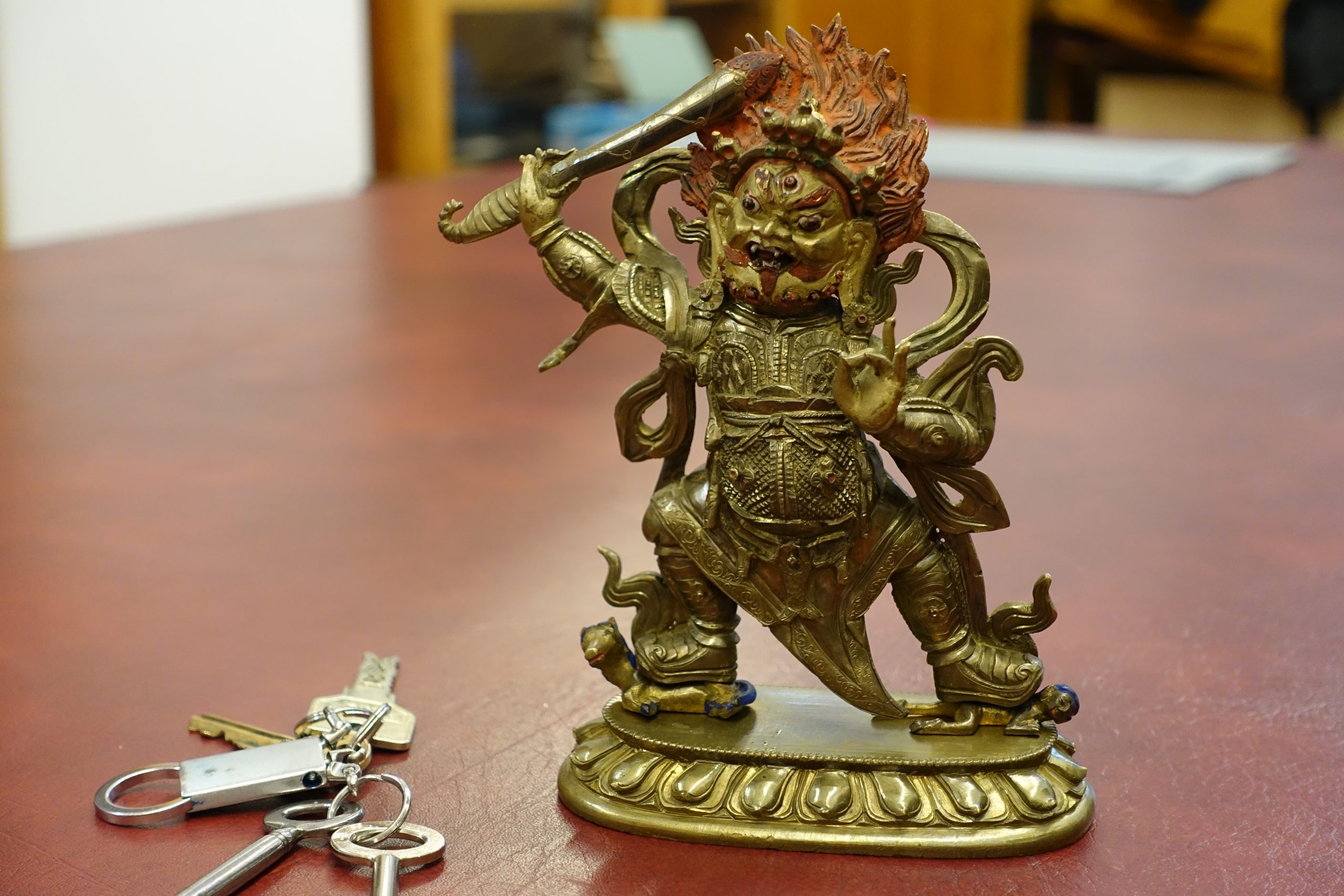
The overall visual appearance is very much resembling the Begtse sculpture which is now missing from the collection. Except for the main attribute, even the position of the arms and the hand gestures are identical. Loss however, is also an issue with the Vajrapāṇi sculpture with regard to some important details. The round holes along the necklaces, armlets and bracelets indicate and remind on the precious stones which had been removed. The metalwork was once more colourful and even more impressive due to the contrast of visual wrath and splendour.