Augmented Closeness
Text by Max Frühwirt
The sculpture in the most prominent, central position atop the dresser was Vajrabhairava embracing his partner Vajravetalī. It stands to reason then that any visitors to the Skušek couple’s apartment would have inevitably come to see and appreciate it from a very close distance, with the mirror additionally providing a view of the back of the sculpture. They would have been able to inquire about it, pick it up or, with the owners’ permission, potentially even touch it.
1. The concept:
Traditional forms of exhibition in a museum do not allow for the same level of closeness to the exhibited object that a visit to the Skušeks would have. Objects are usually placed behind showcases or to be admired from a distance.
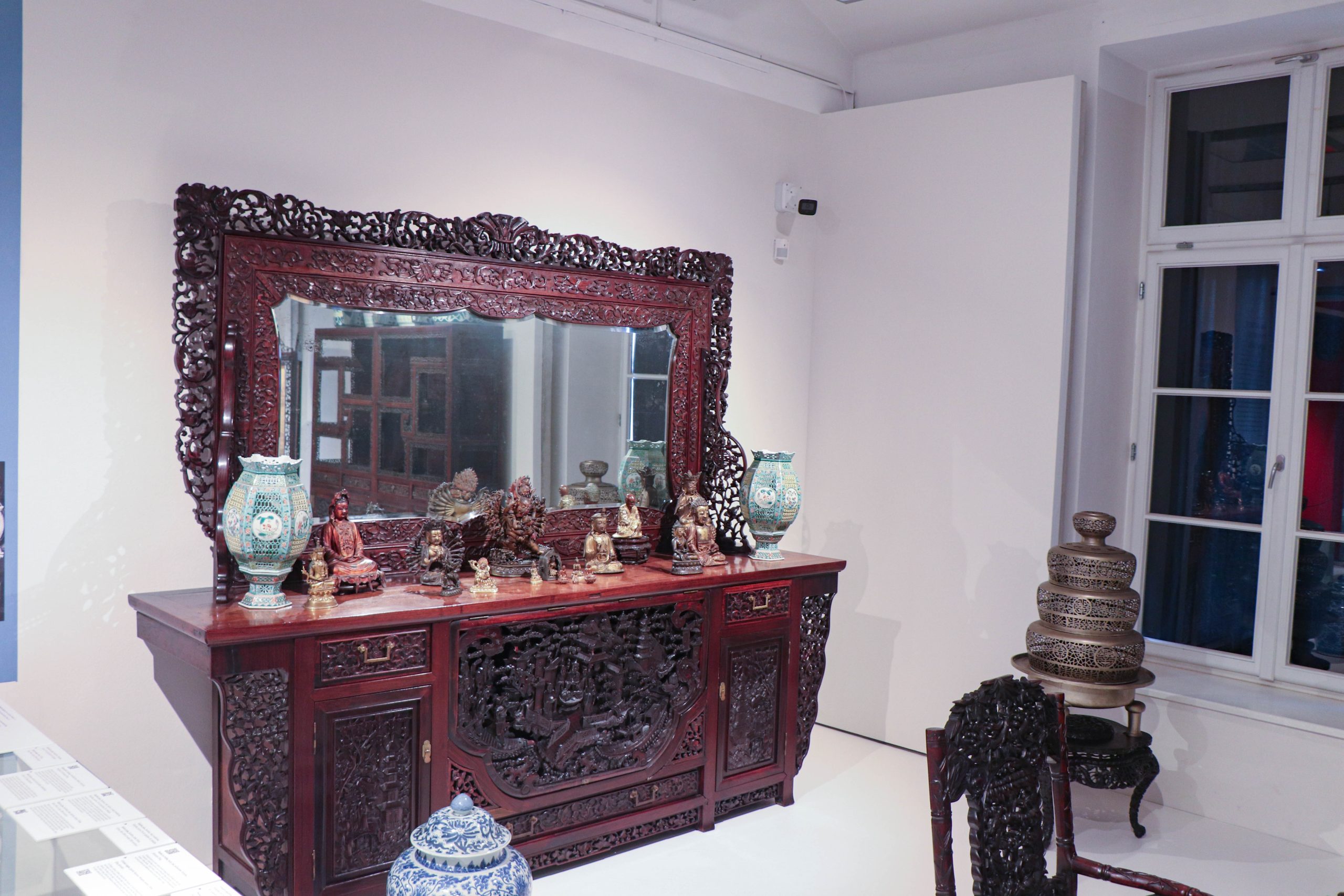
Vajrabhairava sculpture on the dresser from the perspective of a visitor, exhibited as part of the SEM-exhibition “Life of the Skušek collection”, Photograph © Max Frühwirt, 2024
The idea therefore was to investigate, how closeness to the object could be restored using Augmented Reality (AR). The Vajrabhairava sculpture, due to its importance, was chosen as a test case. The goal was to allow users to step closer, to inspect the intricate details, while at the same time giving them some control about the experience via some form of interaction. Thereby, so the idea, the direct touch of the object would not be restored, but some tactile element would be introduced to allow for a more personalised form of investigation. This investigation started as part of the SEM-exhibition “Life of the Skušek collection” and has since been refined.
2. The technology behind it:
With the physical model of the Vajrabhairava already digitised previously, the question remained, how to make it accessible and interactive. Unity’s Vuforia Engine Library was chosen for its ease of implementation and abundance of documentation.
The engine works by first defining a model target for the overlay projection. Said target can either be a 2D object, like a printed pattern on a piece of paper, or a 3D object, which could be self-designed and defined for tracking using Vuforia’s Model Target Generator. In that way, using 3D printing, a wide variety of different model targets could potentially be created. The defined model target, however, needs to be distinct in appearance from different angles. This is to ensure, that the engine actually recognises it and places and orients the augmented model correctly within the real environment. Overly simplistic model targets or those that lack easily recognisable traits or visible markers that support orientation are therefore to be avoided, as distinct features help the engine orient itself within the real space.
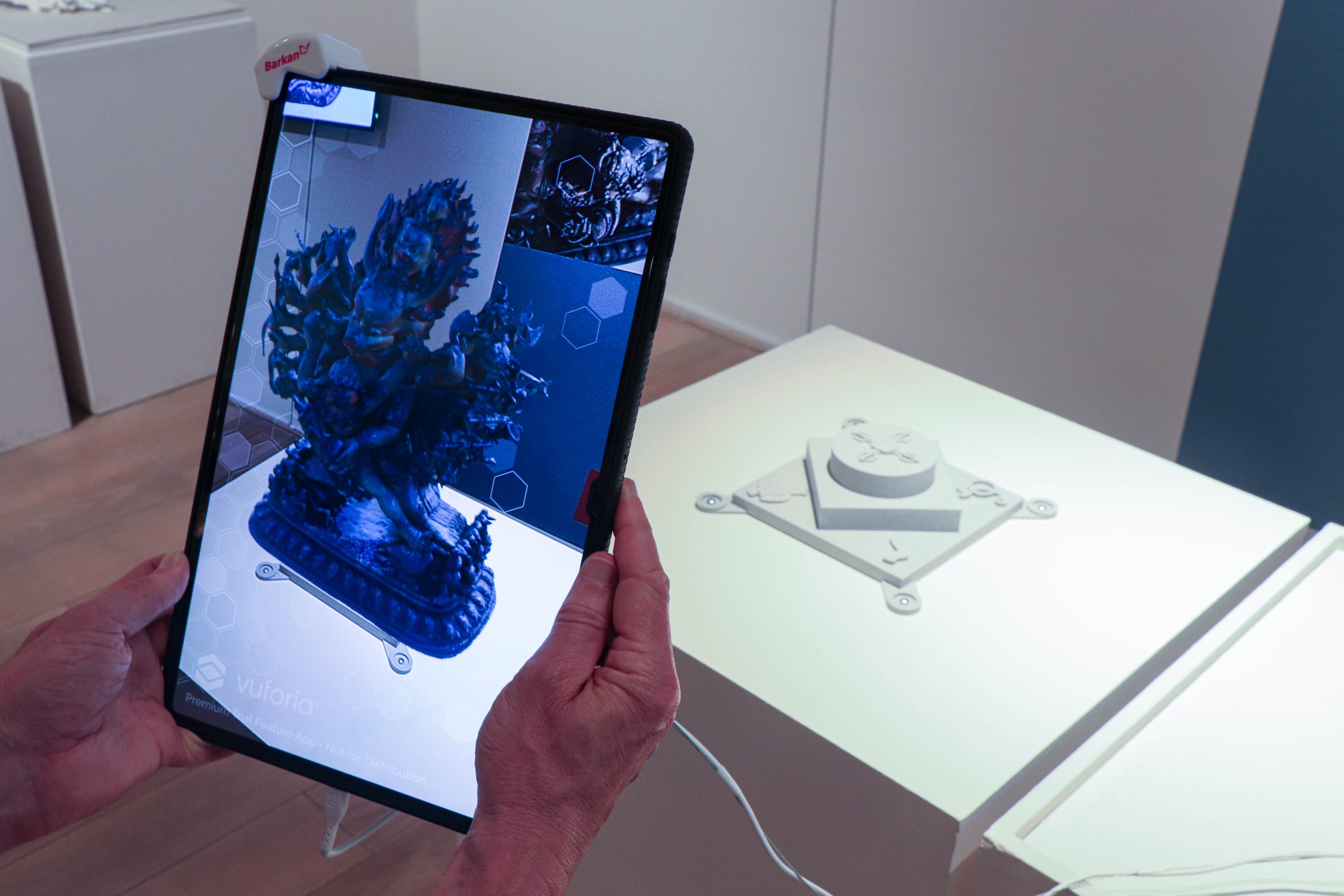
AR model of Vajrabhairava atop its defined model target base, Photograph © Max Frühwirt, 2024
Following these constraints, with a model target defined, the Vuforia Engine is then able to use any eligible device with adequate processing power and a camera, such as a smartphone, tablet or even a laptop camera, to overlay the digital model over the projection base using AR. In this way, multiple projection bases could be defined as model targets. Additionally, configurations or combinations of different bases could also be defined. The engine would then use the camera to live-track the projection base, along with any potential changes to it, and adjust the 3D model accordingly or display additional information. This way, by changing the configuration of the projection base, the user could directly change the displayed model, thus adding interactivity.
3. Designing a projection base – Concept and considerations:
Designing the projection base for a religious sculpture like the Vajrabhairava presented the need to address a variety of considerations. Given the prominence of the depicted deity, not only as part of the Skušek’s house altar, but also in its broader context of Buddhist practice, it was necessary to be very careful when considering form-finding and potential symbolism for the tracking markers. However, at the same time, there was also a unique opportunity to be explored: As Buddhist history already provides us with a number religious depictions of Vajrabhairava, these can be analysed and their iconography explored in a number of ways to inform the design.
First, the depiction of the deity in its own mandala – such as the one in the Rubin Collection, New York. The composition of the mandala thereby follows a strict geometric programme, made up of concentric circles and squares, that combine into a form of architectural blueprint for an idealised palatial structure. Vajrabhairava sits in the middle of the mandala, occupying the central niche.
Second, the sculpture itself provided two additional forms of inspiration: The base, with its intricate carving, and the attributes held by the couple. Since these are direct markers of identification, not just for Vajrabhairava in general, but for the specific sculpture that is part of the Skušek collection, it was decided to also incorporate it into the design process of the base.
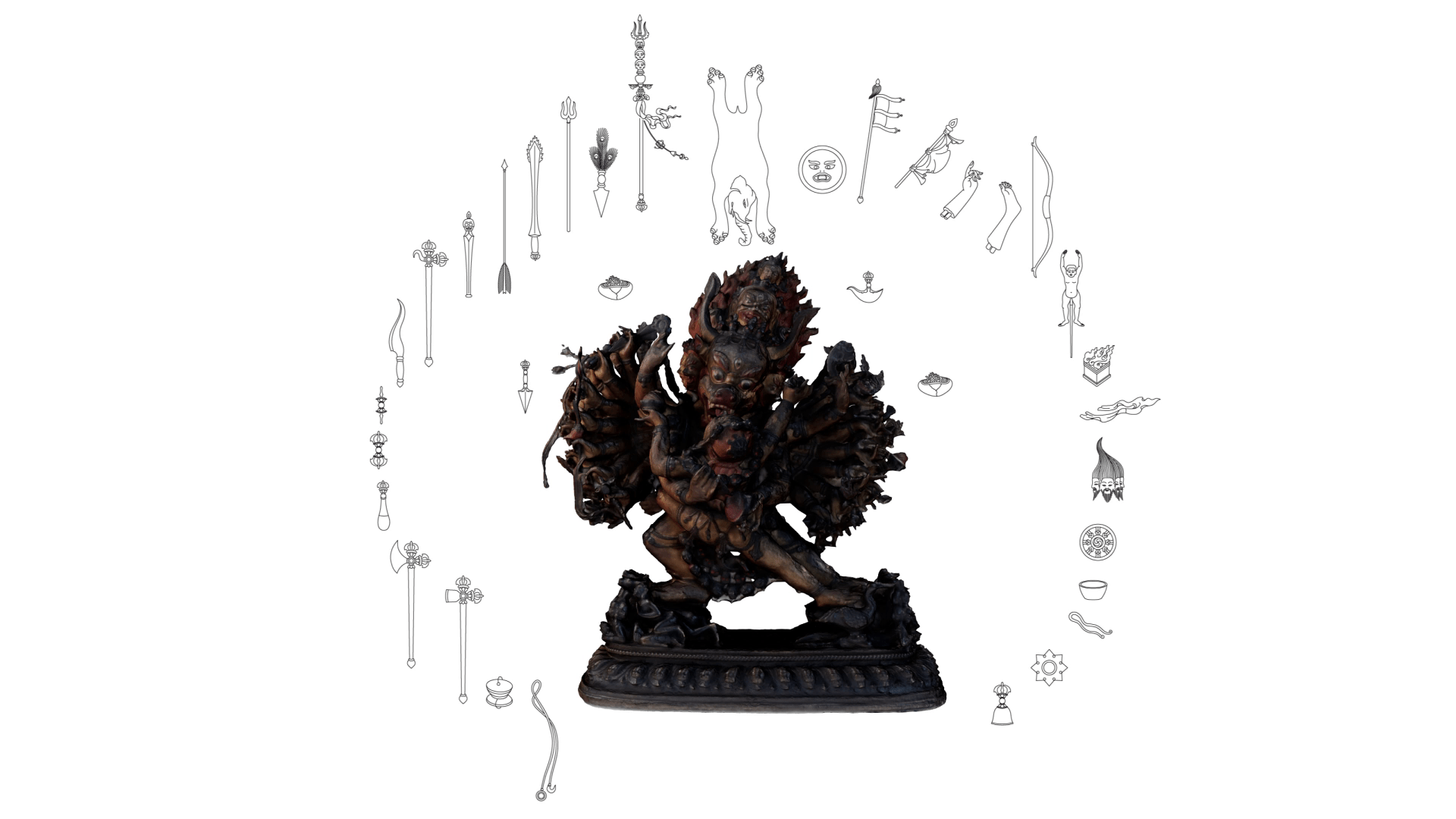
Vajrabhairava sculpture surrounded by its attributes, Visualisation © Max Frühwirt, 2025 with Drawings © Gerald Kozicz, 2024
It is important to note, at this point, that the inclusion of religious symbolism into the base projection base of the AR model presents a reflection of existing iconographic conventions. When analysing Buddhist sculptures, it becomes apparent, that the sculpture itself cannot be seperated from its base, as it is the base that usually provides additional markers for identification or places the sculpture within a specific religious context. As such, the design of an AR projection base for a religious sculpture like the Vajrabhairava mirrors that practice.
4. Designing a projection base – v1:
The first concept base design was intentionally kept simple. Inspired by the simple geometric shapes of the Vajrabhairava Mandala, it consists of two cuboids as the first and second layer and a cylinder as the top layer. The size of the base was, to a certain degree, set by the print bed of the 3D printer. Therefore, the final dimensions were 200 x 200 x 15 mm for the bottom cuboid, 130 x 130 x 25 mm for the second cuboid and a radius of 50 mm and height of 25 mm for the top cylinder. The second layer is thereby rotated by 45 degrees compared to the first. A certain similarity in the arrangement to traditional lantern ceilings can certainly be observed.
Since with those shapes alone, a clear direction of the base could not be established, it was decided to add four attributes of Vajrabhairava to the base, with each corner of the bottom cuboid showing one. The attributes were thereby selected following two criteria: Iconographic importance and ease of tracking with the engine. The selected symbols are a separated arm, a separated leg, a band of entrails as well as an assortment of four heads, including hair. Additionally, in the centre position of every layer, a Vajra cross, that’s similar to the engraving at the bottom of the sculpture in the museum, was added. The symbols, to save processing power when tracking them with the engine, but also to ensure a clean appearance after the 3D print, were simplified and extruding from the top surface of the layers in a relief.
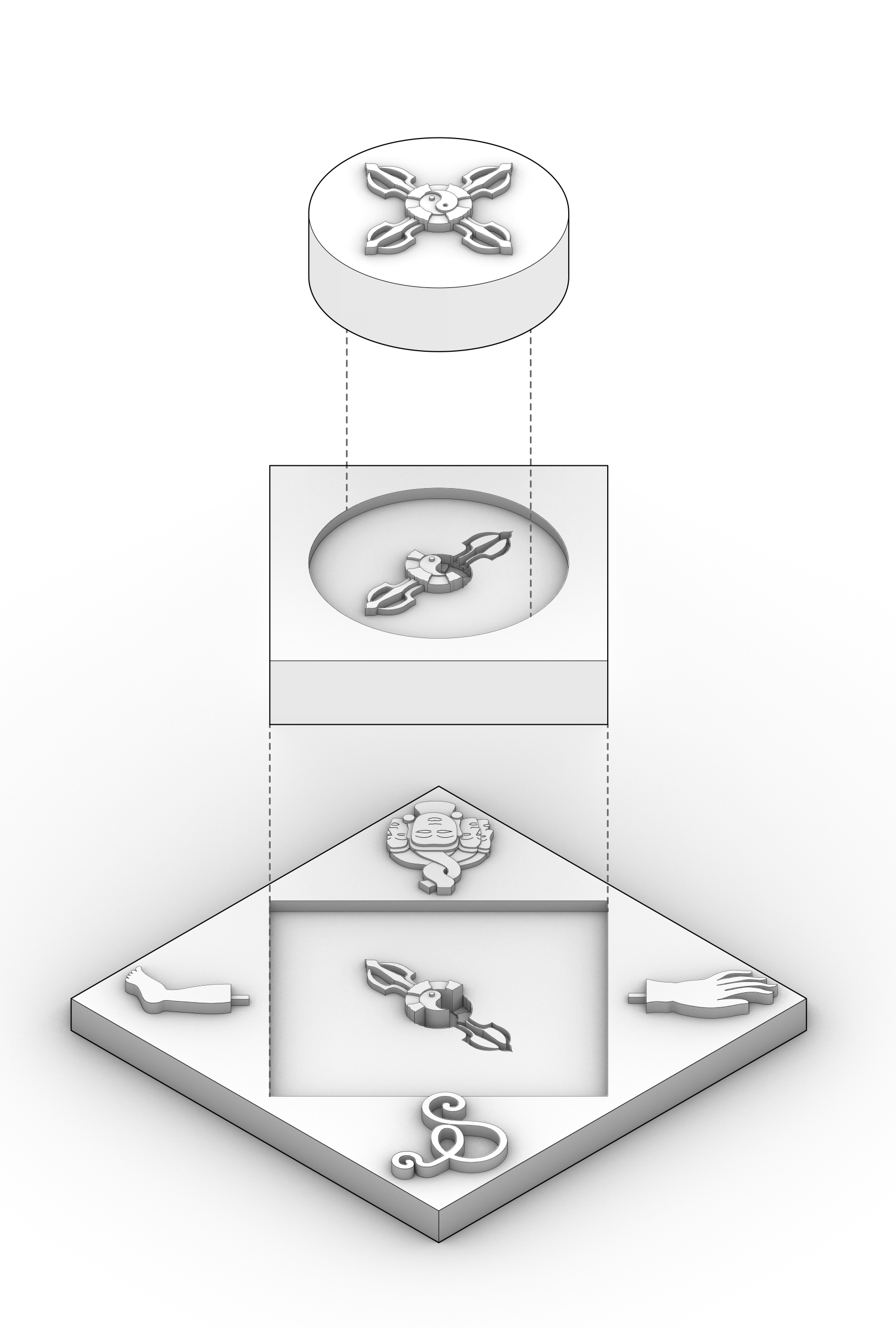
Design v1 of the different layers of the Vajrabhairava projection base, Visualisation © Max Frühwirt, 2026
The designed layers allowed for three stages of assembly. Each stage thereby corresponded to a different configuration of the augmented overlay. The designed interaction therefore functioned using addition and subtraction of parts of the projection base to influence the displayed mesh. The AR application, constantly tracking the projection base, would recognise any change to it and seamlessly switch between the different configurations.
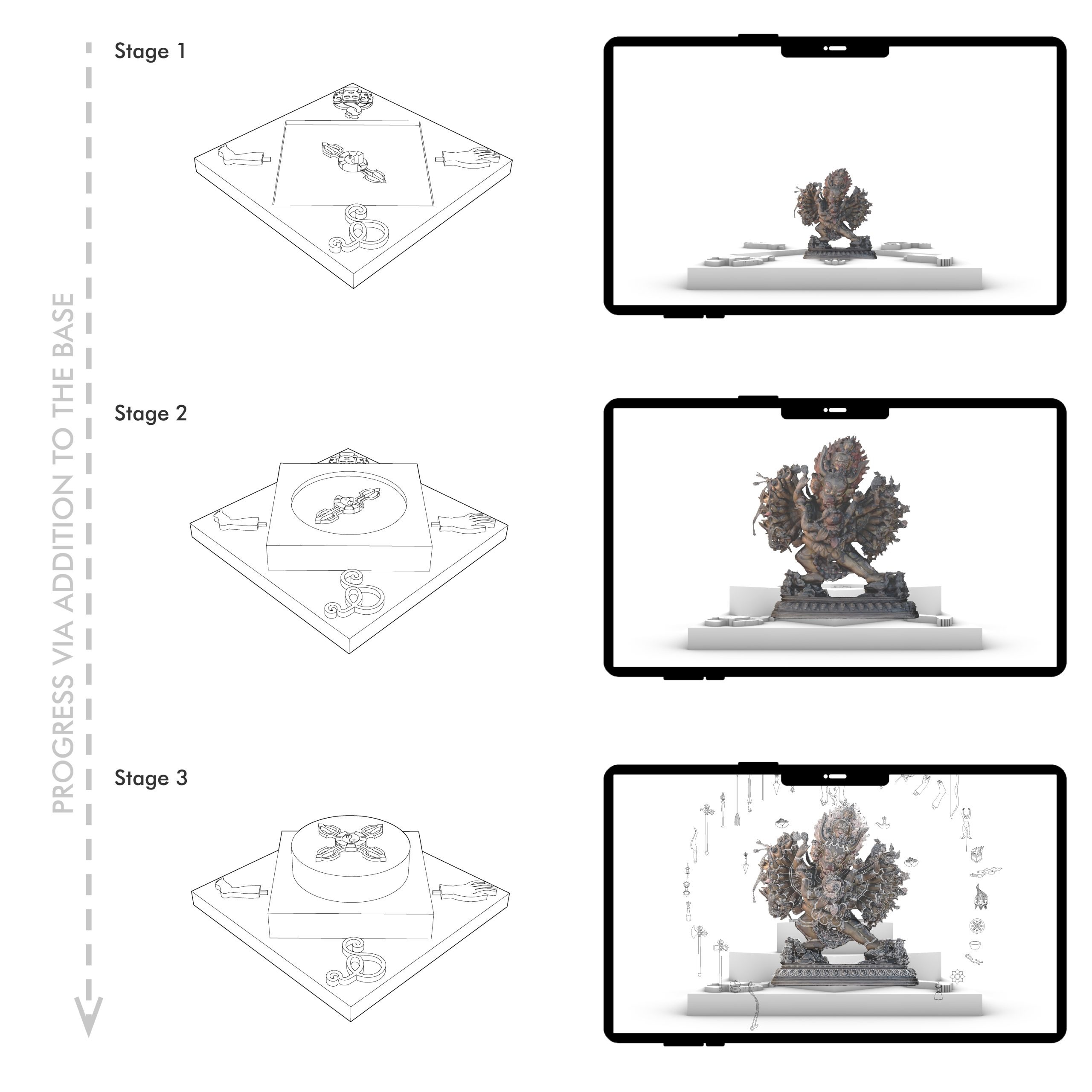
Design v1 of the different layers of the Vajrabhairava projection base, Visualisation © Max Frühwirt, 2026
Stage 1 of the configuration was the most basic representation. It simply showed Vajrabhairava in its original size projected atop the projection base. Due to the aforementioned symbols on the base, it was ensured that the digital AR model would always face in the same direction. This allowed visitors to walk around the base and inspect it from different angles, as it was fixed in space. By adding the second layer of the projection base, visitors were able to adjust the scale of the model.
Instead of the approximately original size that Stage 1 presented, Stage 2 showed the digital AR overlay at approximately twice the original size. It is important to note here, that even bigger scales would also be possible to set up in the app starting at this stage. This allowed visitors to get a much closer look at all the intricate details and attributes of the Vajrabhairava. It therefore increases the level of closeness even further.
Stage 3 meanwhile, which can be accessed by adding the cylinder as the top layer to the projection base, adds an additional level of information. It displays a manual, detailed drawing of the sculpture, projected in front of it in 3D space. This acts as an additional highlight of all the craftsmanship and fine details that make up the sculpture. Additionally, to add to the iconographic information layer and make it easier to read, all attributes of Vajrabhairava and Vajravetalī are arrayed in a fan around the sculpture as two dimensional illustrations as well.
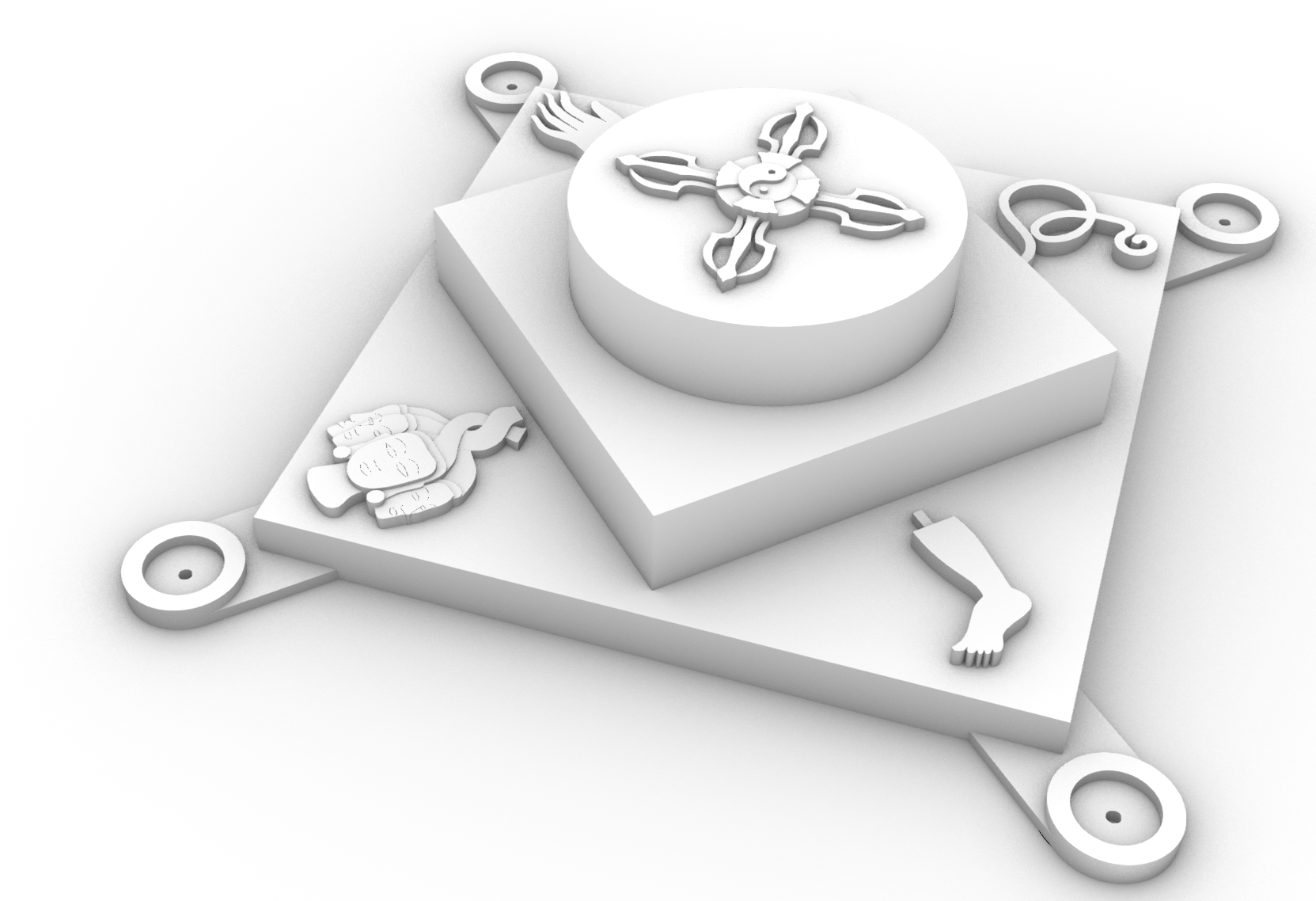
Design v1 of the Vajrabhairava projection base assembled, Visualisation © Max Frühwirt, 2024
While all of the previous interactions have been tested before and are working as described in some early builds of the AR app, they have sadly never been on exhibit. Shortly before the exhibition opening, due to concerns voiced by the Slovene Ethnographic Museum about pieces being displaced or stolen during the exhibition, it was decided to reduce the base to one, singular piece. While the different layers of interaction would be reduced as well as a result, this was seen as the safer, more desirable solution. Additionally, protrusions were added to the corners of the bottom layer so it could be screwed down and fastened to the exhibition base below it, making it harder to remove or steal. Nonetheless, the inclusion of AR still allowed for a much closer and more personalised inspection of the Vajrabhairava’s details and attributes than the original, physical sculpture, that was also on exhibition, would.
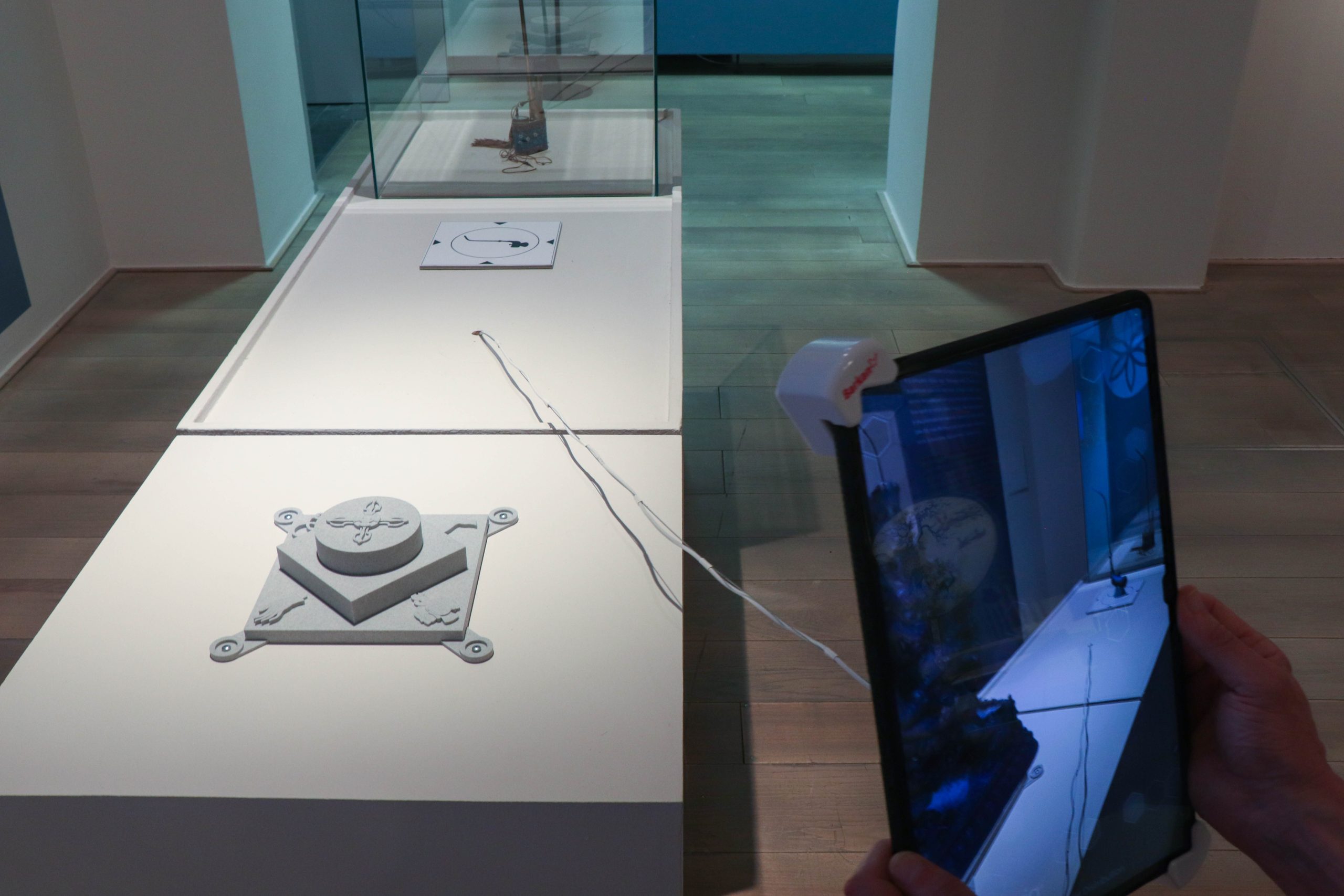
Finished v1 of the projection base as part of the SEM-exhibition “Life of the Skušek collection” including additions to screw it down and hold it in place, Photograph © Max Frühwirt, 2024
5. Designing a projection base – v2:
After the museum exhibition at SEM ended, it was decided to design a second, updated version of it. Using the insights gained from the exhibition as well as from the design of the first projection base, this v2 was intended to allow even more interaction than v1. Meanwhile, it was decided to also retain some of its core ideas, like using the iconography, history and religious context of the original sculpture as an inspiration.
The new base shape was modelled after similar bases of comparable Buddhist sculptures. One such sculpture is exhibited in the Philadelphia Museum of Art (PMA), sporting a round base. This base became the foundation for the design of the bottom two layers. At the same time, the base of the Vajrabhairava sculpture itself was used to inform the top two layers. This was seen as conclusive, as in the sculpture from Philadelphia, the main sculpture was also placed at the centre on a separate, smaller pedestal, similar to how the finished v2 projection base is arranged.
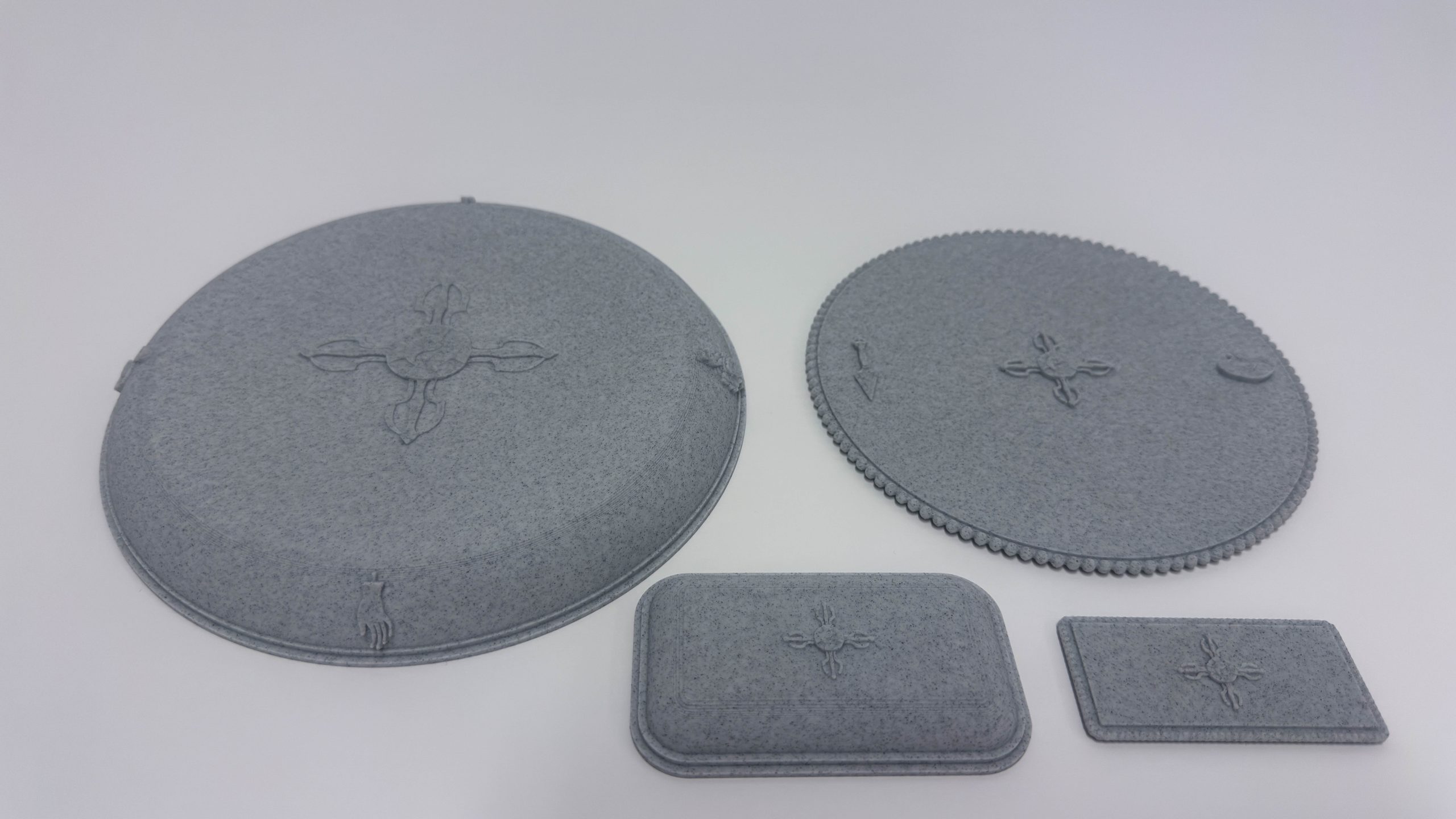
Parts of projection base v2 from the top, Photograph © Max Frühwirt, 2026
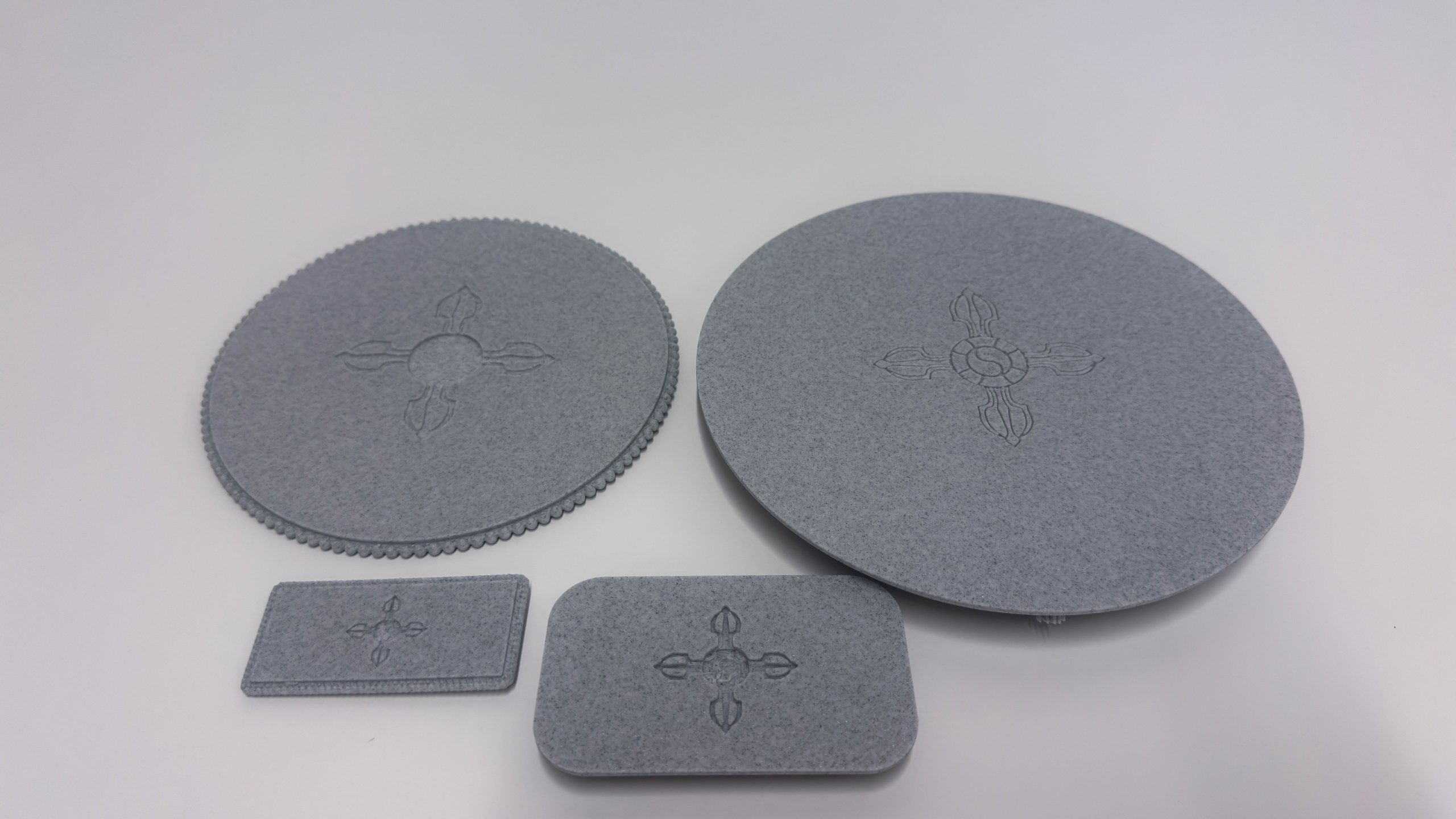
Parts of projection base v2 from the bottom, Photograph © Max Frühwirt, 2026
The new base is envisioned as consisting of four arrangement stages, that allow for multiple configurations for some of the stages, thus increasing the potentials of interaction by the visitors. Same as with the previous base version, the different layers are stacked atop each other, with the AR app using live-tracking to constantly monitor any changes to the arrangement and adapt the AR overlay accordingly.
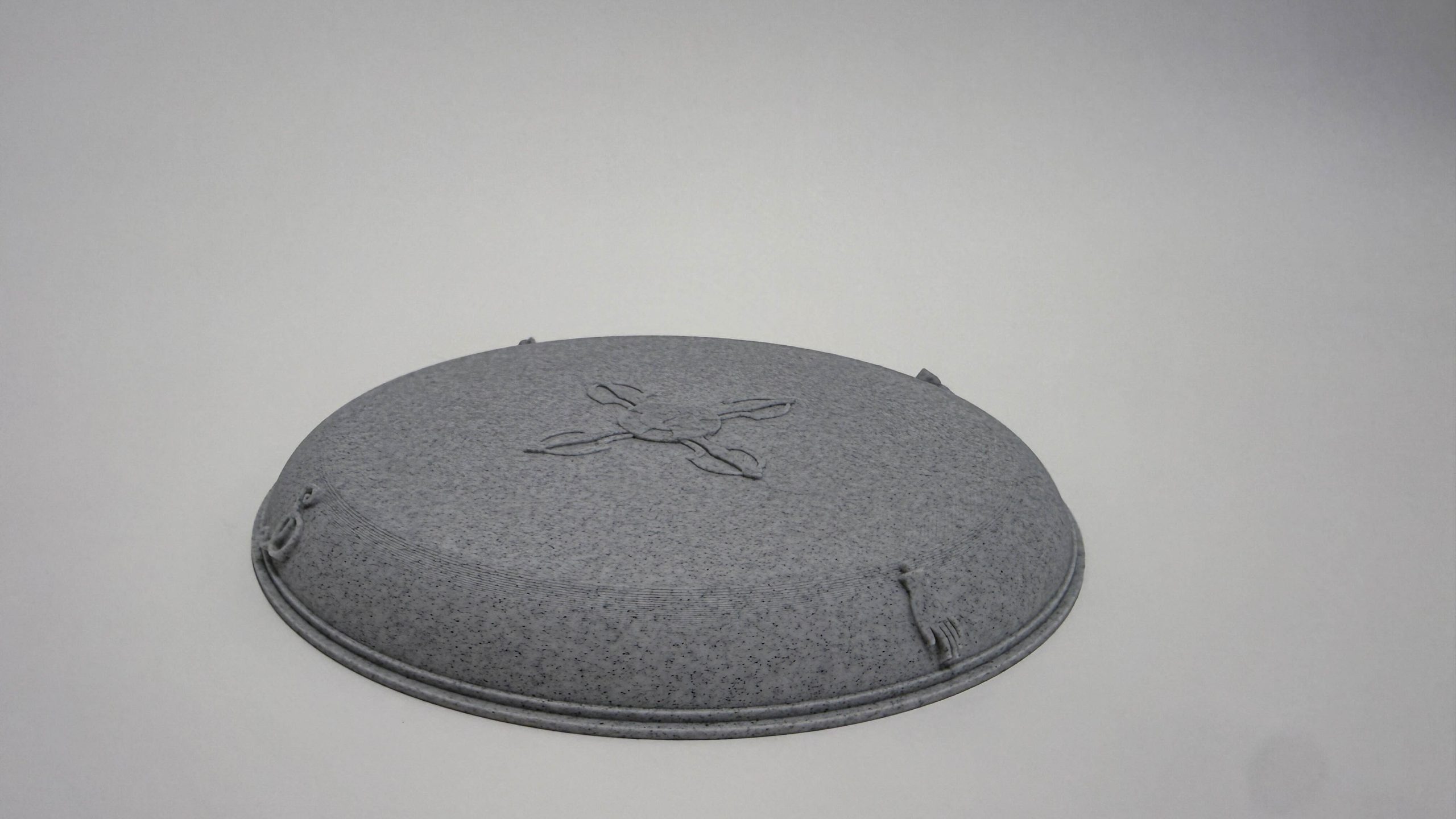
Stage 1 of projection base v2, Photograph © Max Frühwirt, 2026
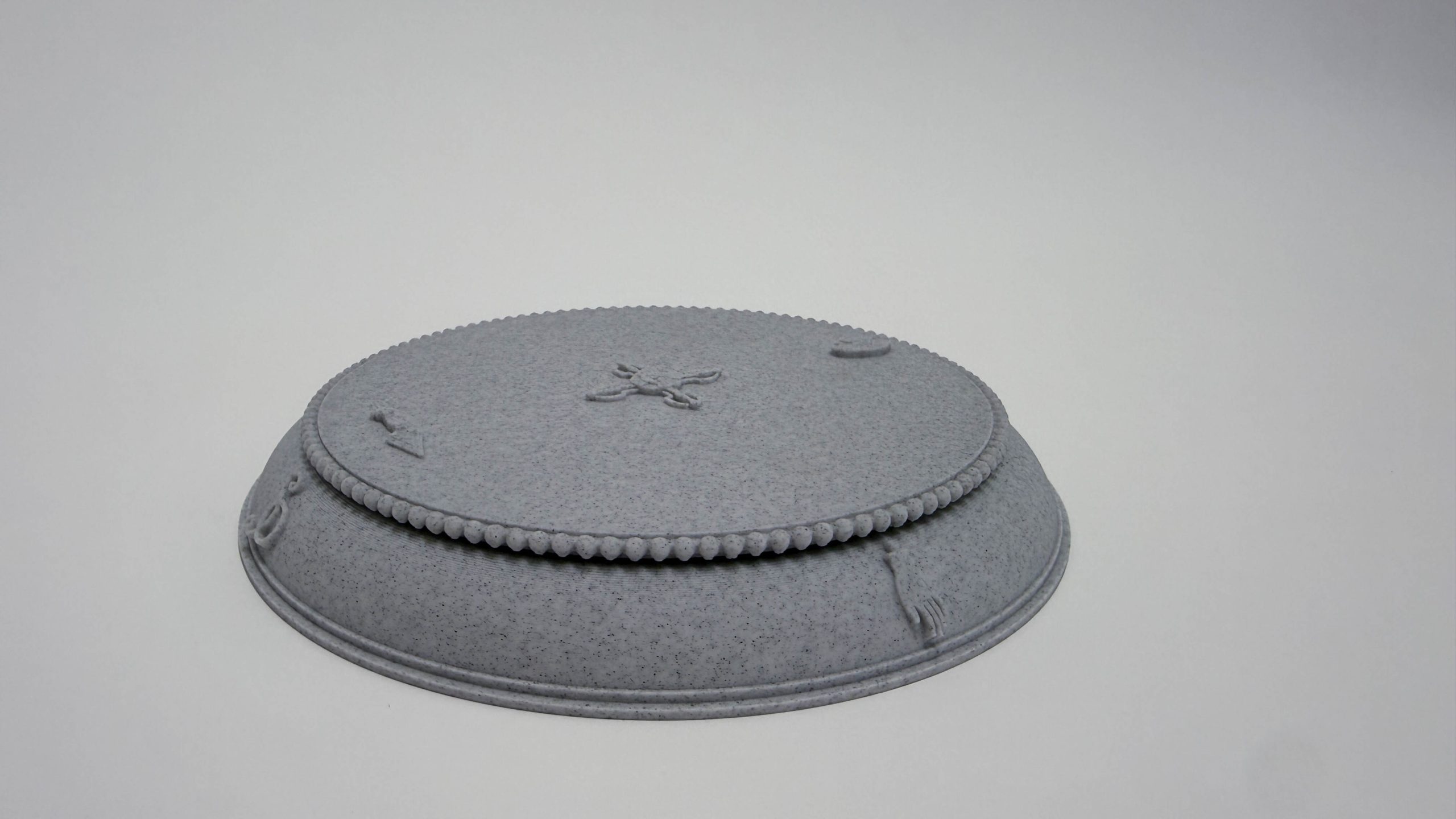
Stage 2 of projection base v2, Photograph © Max Frühwirt, 2026
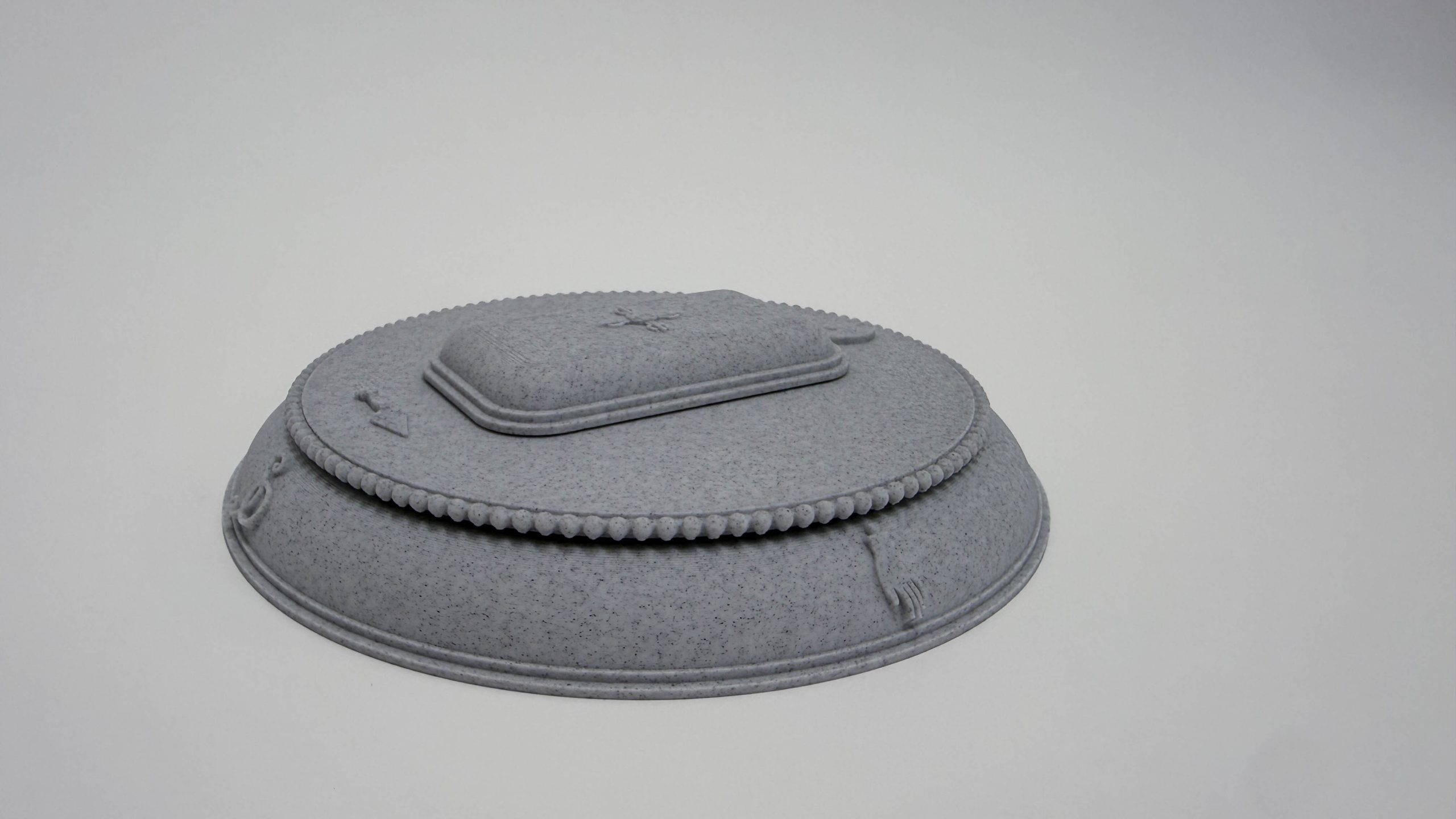
Stage 3 of projection base v2, Photograph © Max Frühwirt, 2026
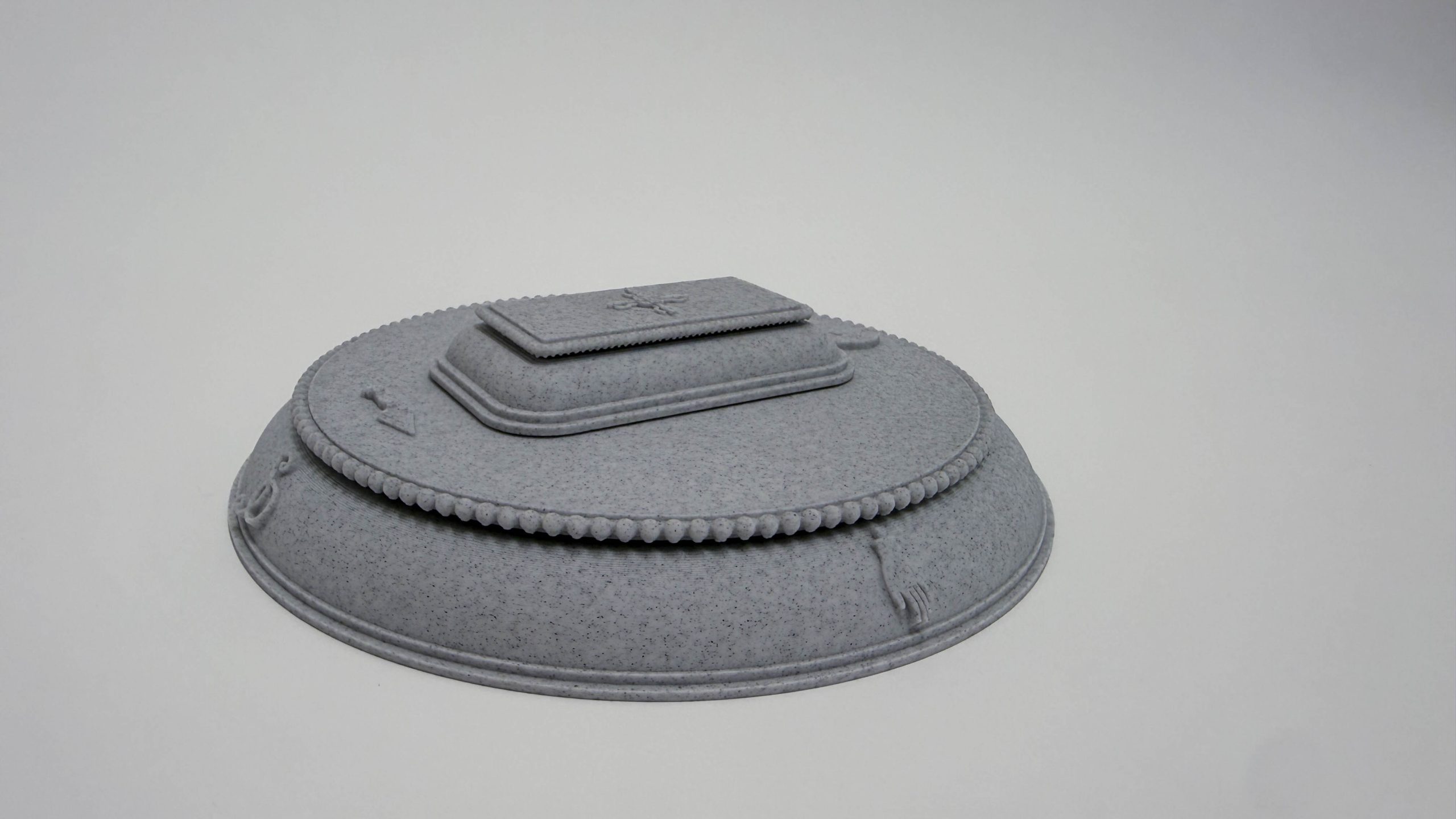
Stage 4 of projection base v2, Photograph © Max Frühwirt, 2026
One addition to the concept was, to allow the user a more direct control over the size of the AR overlay, by rotating the second layer of the base. The relief of the Vajra cross at the centre, which was kept from the previous version, thereby acts as a locking mechanism. It allows for exact 90-degree rotations, thus enabling the user to choose between four different sizes for the overlay. It is important to note, however, that the direction of the Vajrabhairava projected atop the base always follows the second layer. Thus, by rotating the second layer, it is possible to not only scale the overlay, but also rotate it.
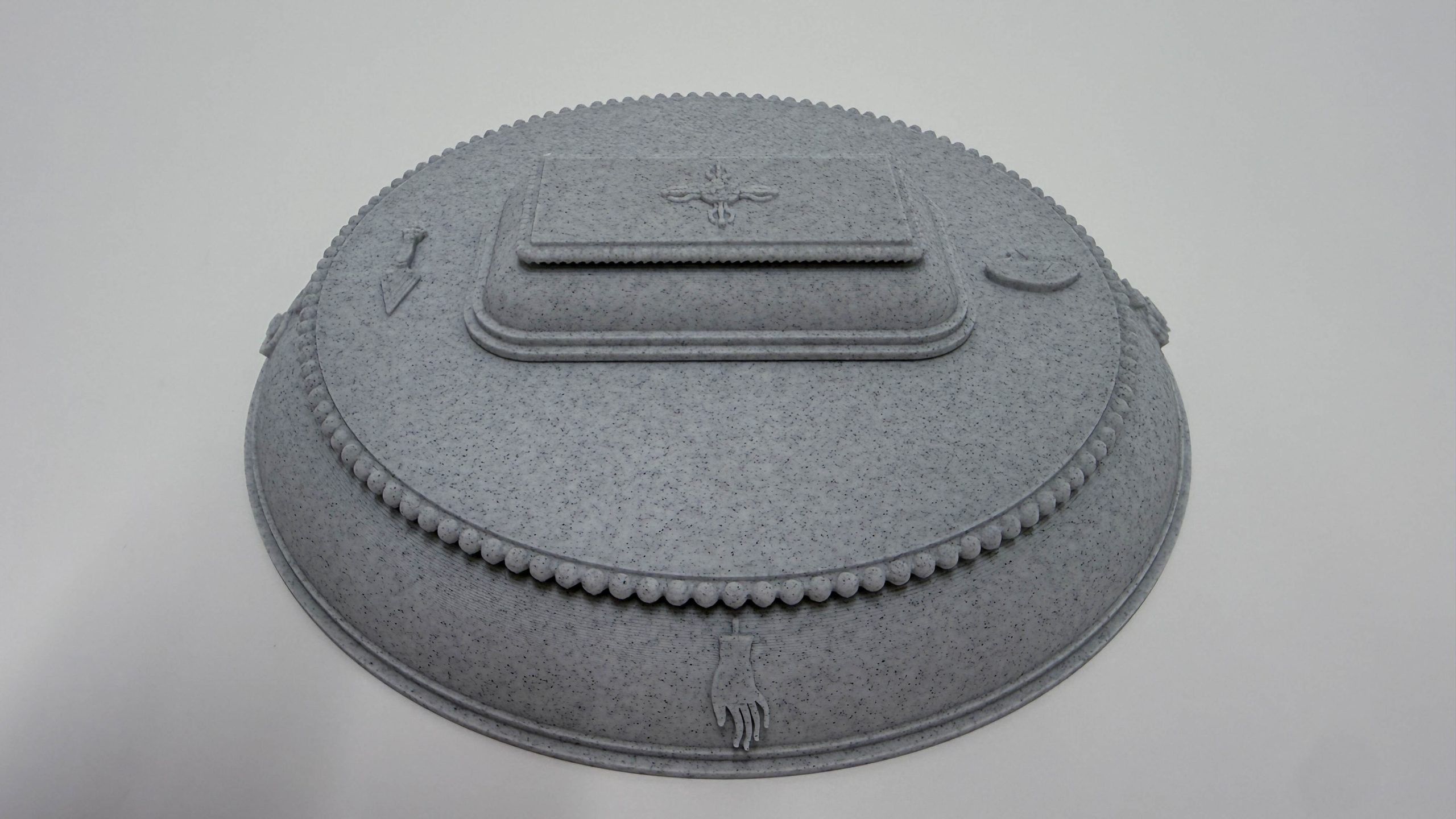
One possible rotation of Stage 2 of the projection base, Photograph © Max Frühwirt, 2026
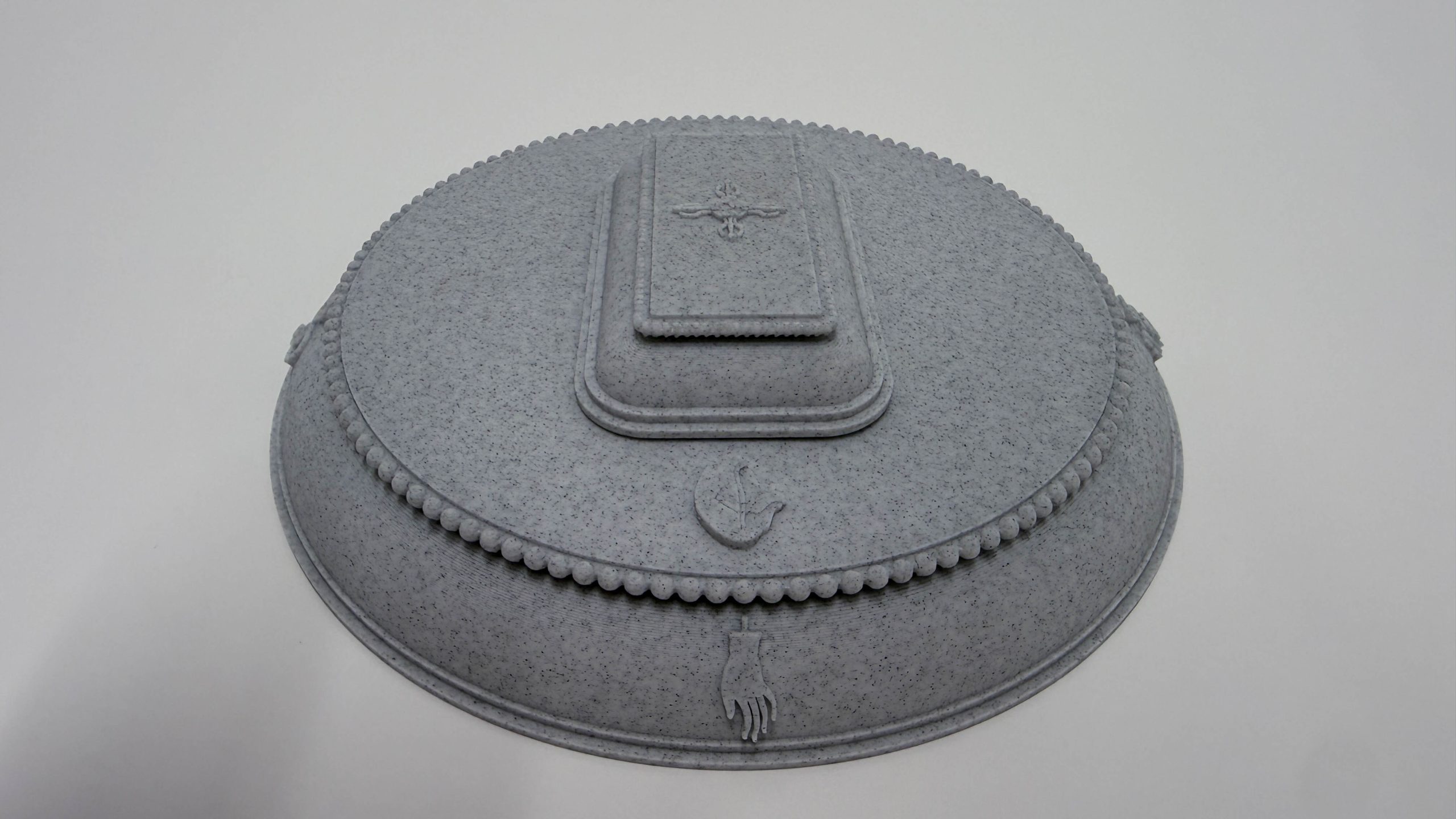
One possible rotation of Stage 2 of the projection base, Photograph © Max Frühwirt, 2026
As the design process of the AR application – including its information layer and digital model variations – is still ongoing, only the base has been finished at this point in time. As such, a complete entry, detailing the finished project will be added at a later date. Nonetheless, some of the potentials of the new projection base should already be apparent at this stage as well.
References
Cho, Yong (2023): Vajrabhairava Mandala: Woven Mandalas in the Mongol Imperial Court, Project Himalayan Art, Rubin Museum of Art, online in: https://rubinmuseum.org/projecthimalayanart/essays/vajrabhairava-mandala/ [08.08.2026].
Kozicz, Gerald and Luo, Di (2024): The Adamantine Terrifier on the Dresser, Poligrafi, no. 113/114, Vol. 29, pp. 31-59. DOI: https://doi.org/10.35469/poligrafi.2024.453.